

Surging food prices and supply-chain bottlenecks are creating new challenges for New Jersey’s emergency-food network which is working even harder to keep up with demand this Thanksgiving.
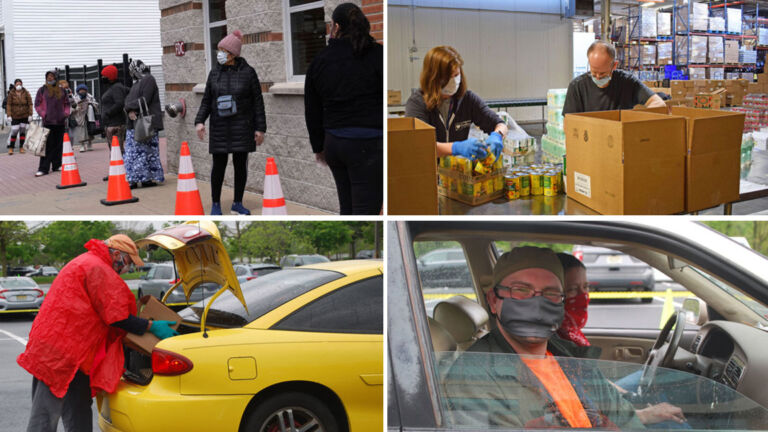
At a time of year when demand is always at its annual peak, food banks and pantries are trying this year to cope with a double whammy of more clients who suddenly can’t afford supermarket prices, and the limited availability of some items.
For Thanksgiving turkeys, prices have almost doubled from last year while supply is a fraction of what it should be to meet demand, said Carlos Roldan, director of three north Jersey food pantries at Catholic Charities, Diocese of Paterson.
Two days before Thanksgiving, Roldan said he had given out some 1,400 turkeys to 228 families over the previous seven days but the supply was way below the level of demand.
“If I had a turkey for every person who came to the store in the month of November, it would be at least 10,000-12,000 turkeys,” he said.
Supply shortage
The retail price of a turkey to feed a family is now $40-$50, around twice what it was a year ago, Roldan said. That has forced more people to turn to food-distribution organizations like his for help, but they won’t always be able to find what they need because of the supply shortage.
Catholic Charities has the money to pay for more turkeys but simply can’t find them, he said. He blamed the shortage on the COVID-19 pandemic, which drove away many poultry workers who might have raised more turkeys earlier in the year.
In an interview with NJ Spotlight News early Tuesday, Roldan said there were about 60 people already waiting for food outside his Paterson pantry, and he predicted he would serve about 300 by the time it closed at lunchtime.
In October, the overall price of food in grocery stores and supermarkets was 5.4% higher than in October 2020, according to the federal government. The biggest price increases were for pork, which rose 2.2% from September to October; beef and veal, which jumped 1.9%, and poultry whose prices were up 0.8% on the month. For 2021, the overall price of meats, poultry and fish is expected to rise 5%-6%.
“Prices have been driven up by strong domestic and international demand, labor shortages, supply-chain disruptions, and high feed and other input costs,” according to a monthly bulletin from the U.S. Department of Agriculture.
Unemployment, a strong indicator of demand for food assistance, dropped to 7% in New Jersey in October, less than half its pandemic peak but still around twice its pre-pandemic level. Even though more people are going back to work, their jobs may not be paying enough to keep pace with price inflation for food and other items, advocates say.
Struggling to pay even if employed
Roldan of Catholic Charities estimated that 70%-80% of his clients have jobs but many struggle to pay the bills and so turn to food pantries for help.
“Somebody who is making $15 an hour and paying $1,600 in rent cannot go to a supermarket to buy food. They just can’t do it so they have to come here to pick up from us,” he said.
At the Community Food Bank of New Jersey, the state’s largest, higher food prices add to challenges already faced by people who have endured almost two years of economic hardship from the pandemic, as well as raising its own costs to purchase food, said president Carlos Rodriguez.
The food bank distributed about 70,000 turkeys and chicken roasters for Thanksgiving this year, doubling last year’s total, and combining donated and purchased birds, said spokeswoman Nicole Williams.
The funding was expected and baked into the food bank’s plans, Rodriguez said, but that doesn’t diminish its importance in helping it distribute a planned $27 million worth of food in the current fiscal year, ending June 2022. “Without that, we’d have a big problem in the back half of the year,” he said.
The latest sum is $5.2 million, part of $10 million in federal funds that New Jersey distributed to the community food bank and five others, and announced publicly on Nov. 18. The new funding reflects persistently high demand for food assistance, said Jeff Wolf, a spokesman for the New Jersey Department of Agriculture, which distributed the funds.
Greater food insecurity
“This funding has been made available as a result of increased food insecurity due to the pandemic,” he said.
The community food bank was already planning for pandemic-level food demand to persist for months or years after the public health emergency fades. The experience of other economic crises such as the financial market crash of 2007-2009 shows that people take years to pay off debts incurred during involuntary unemployment, forcing some to turn to food banks and pantries for help, Rodriguez said.
Now, higher food prices are creating more headwinds for the latest recovery. “Every crisis points to a multiple-year recovery for those who are impacted,” he said. “That outlook was before inflation including food, heating oil, gasoline. We know this is going to create an impact and a hardship for families that have been struggling.”
Food banks and pantries are also bracing for an end to the state’s eviction moratorium after Dec. 31 for low-income renters who have been hit by the pandemic. A surge in evictions is likely to boost demand for emergency food because affected people will prioritize rent in an effort to keep a roof over their heads, or turn to food pantries if they become homeless.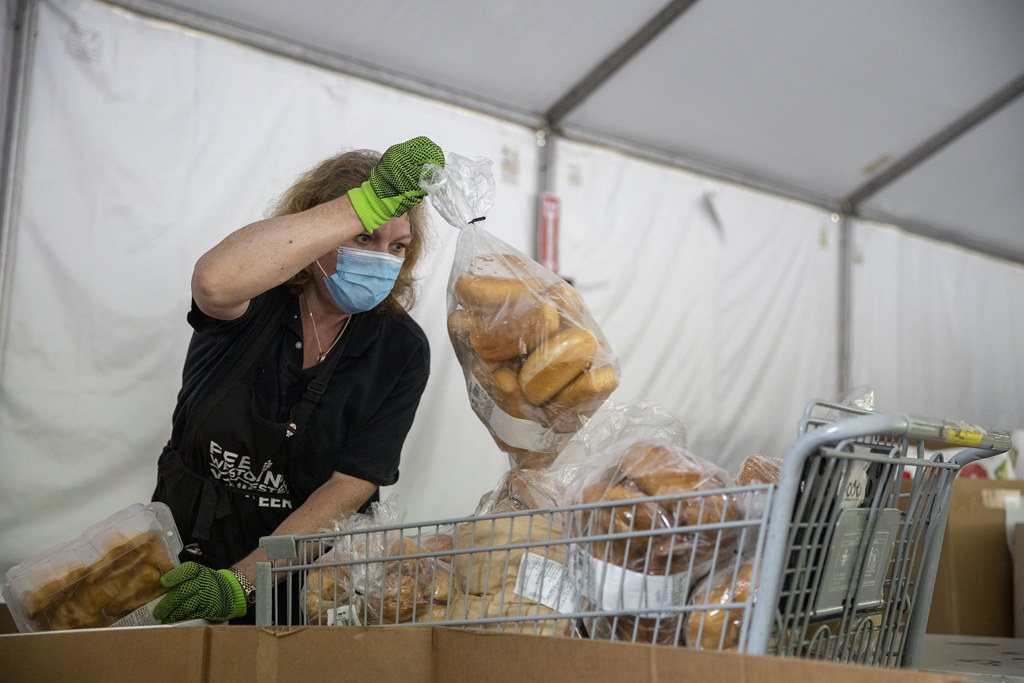
“This need is not going to go away,” Rodriguez said. “Rent arrears are high. There’s a lot of activity in the courts. We hope that those get resolved, with families being able to pay what they owe. But we know there will be some fallout. Will that create another level of crisis? We hope not but we stand at the ready if it does.”
In Pennsauken, the Food Bank of South Jersey expects to distribute 1.5 million pounds of food in November, including 20,000 turkeys, exceeding its earlier projection by 250,000 pounds, said president Fred Wasiak.
He said rising food prices are increasing food insecurity — in which people don’t have consistent access to enough nutritious food — which affects one in seven people and one in five children in the food bank’s service area of Burlington, Camden, Gloucester and Salem counties.
The new federal funding will help offset higher costs for food and distribution whose costs have doubled for the food bank since the start of the pandemic, Wasiak said.
“When food prices go up, food insecurity goes up, and this is always heightened during the holidays,” he said.
