
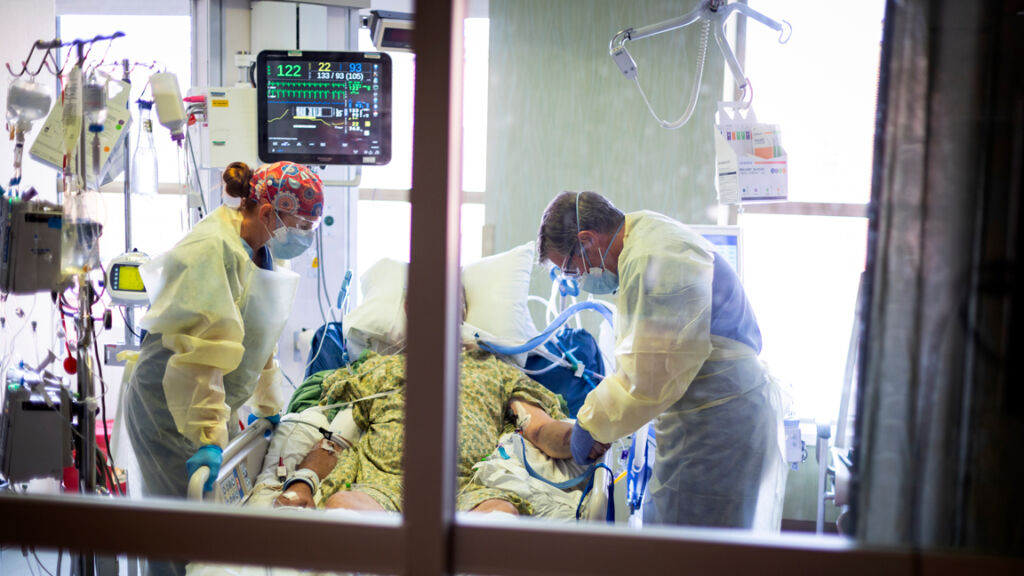
COVID-19 infections are on the rise again at schools and colleges in New Jersey and state officials say that with community spread also growing and the holiday season raising the risk of more viral spread, another pandemic surge could leave 2,000 residents hospitalized by January.
On Monday, Gov. Phil Murphy urged people to get COVID-19 booster shots or start their immunization cycle if they haven’t yet. Boosters are now available to all adults who were vaccinated six months ago with the Pfizer and Moderna vaccines, or two months ago if they got the Johnson & Johnson version.
New diagnoses are up 26% in New Jersey over last week — more than double the nationwide average. Hospitalizations have increased by nearly 11% and intensive care admissions have grown by 24% over the same period, according to government figures, although they are still significantly lower than they were at this time last year. However, the rate of transmission, a measure of how effectively the virus is spreading, has also been climbing sharply for weeks.
Most new cases are among unvaccinated
“Most of these new cases continue to be among unvaccinated individuals. But that doesn’t mean that they can’t spread the virus to vaccinated individuals whose initial courses may now be providing a slightly less aggressive level of protection,” Murphy said during his regular pandemic media briefing. “So go out and get that booster, especially as the holiday season is now here and many of us will be gathering with families this year much more like prior to the pandemic. We do not want to see cases spike.”
That spike could already be underway at some schools and universities in New Jersey, according to state data that officials made public Monday. While new case numbers were higher earlier this fall — diagnoses among K-12 staff and students soared in October and higher education cases peaked in mid-September — they had been trending downward for weeks. The data covers only 40% of colleges and 60% of grade schools in New Jersey, as the reporting is not mandatory, but those alone had nearly 23,000 infections in K-12 settings and 1,500 on college campuses since classes began.
State Health Commissioner Judy Persichilli said the new data functions as a surveillance tool, allowing parents, educators and public officials to identify and track trends that can help them decide when remote learning or quarantines may be needed. The information combines reports from staff, parents and administrators at more than 2,000 K-12 schools and several dozen colleges, she said, and it supplements state reports on school-based outbreaks in each county.
Persichilli: ‘I’m a natural worrier’
“We are concerned about cases in students and staff and among the general public increasing with gatherings for Thanksgiving and other upcoming holidays,” Persichilli said, reiterating the importance of getting vaccinated and boosted. She also urged people to take other precautions, like wearing masks, washing hands, avoiding crowded spaces and staying home when sick.
“I’m a natural worrier when it comes to this virus,” Persichilli said, when asked if she feared a spike in infections in the months to come. “But I think that people do have the message. Those that want to adhere to it will adhere to it. And they will be safer for it.”
The new school-related data also hints at vaccination rates among educators and college kids, information the state has been trying to collect for weeks. That information is reported by county, with immunization among K-12 teachers ranging from 78.7% in Ocean County to 91.1% in Somerset. In higher education, vaccination rates among students ranged from 59.8% (Bergen) to 92.1% (Hudson), and from 80.2% (Bergen) to 94.7% (Atlantic) for staff, with 16 of 21 counties included. (Vaccination rates for grade school students is not available in the same format.)
Murphy: ‘This is never going to zero’
Nearly 6.2 million New Jerseyans have now been fully vaccinated against COVID-19, two-thirds of whom are now eligible for a booster shot. So far, fewer than 1.1 million have received that additional shot, according to the state. Murphy noted booster uptake has increased, but it is still not as high as officials would like. They also want to raise immunizations among children ages 5 to 11, the most recent age group to be approved for the vaccine.
“This is never going to zero. This is with us,” Murphy said of the pandemic. He wished residents a happy Thanksgiving and reminded them to celebrate safely and responsibly — and never to drink and drive. “This can be, if you’re with people who you know them, you know their vaccine status, have at it. Raise hell. Have a good Thanksgiving,” he said. “But if you’re inside, if you don’t know who you’re with, that’s where you’ve got to be careful.”
