
By Ken Branson for Rutgers Today
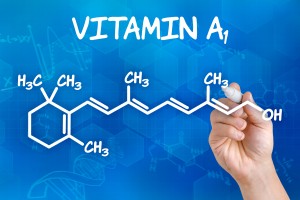
In the current issue of The Journal of Nutrition, a team led by Loredana Quadro, associate professor in the Department of Food Science in the School of Environmental and Biological Sciences, has determined that E. coli bacteria engineered to produce beta-carotene, the most abundant and well-characterized precursor of vitamin A, can be a source of beta-carotene for various tissues within the body in a mouse.
“The long-term goal of our work is to translate this approach into a microorganism that will be human-friendly and will allow us to move from a mouse model system to humans, to actually fight vitamin A deficiency,” says Quadro whose team’s work was funded by a $100,000 grant from the Bill and Melinda Gates Foundation.
Quadro and her team (Michael Chickindas, associate professor of food science; Paul Breslin and Daniel Hoffman, associate professors of nutritional science; and food science postdoctoral researchers Lesley Wassef and Ruth Wirawan) planted in the guts of a mouse a strain of E. coli bacteria to which they previously added a segment of DNA containing four genes necessary to synthesize beta-carotene. The bacteria went to work on the DNA. Not only did they produce beta-carotene, but subsequent tests showed that the vitamin A precursor crossed the intestinal barrier and made itself at home in other tissues of the mouse’s body.
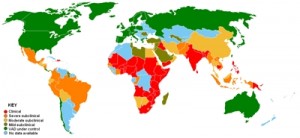
“The usual way to treat people with vitamin A deficiency is to get vitamin A or beta-carotene into them, either with a pill or by getting them to eat food or supplements rich in these compounds,” says co-author Breslin. “But the problem is that people do not take their pill regularly and they are also not eating the beta-carotene engineered rice (golden rice) because it doesn’t look like the rice they are used to. This novel approach could potentially change the way to treat not only vitamin A deficiency, but also deficiencies of other nutrients.”