
NJ Today
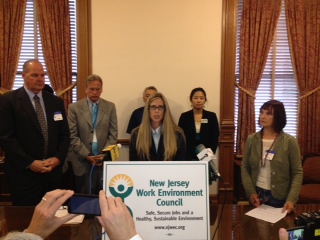
At a Statehouse press conference today, the New Jersey Work Environment Council released a new 43-page report, entitled “Failure to Act,” which says thousands of New Jersey jobs and millions of residents are still at risk from toxic chemical disasters.
These findings come five years after the New Jersey Department of Environmental Protection adopted rules to implement the NJ Toxic Catastrophe Prevention Act that were supposed to reduce that risk.
The author of the report found that 99 facilities still use large quantities of highly hazardous chemicals that can pose a potential catastrophic safety and health risk for millions of people. Many facilities failed to consider solutions for using safer chemicals and processes which already exist and are successful, and a lack of enforcement from the Christie administration.
Some recommendations include stopping facility management from declaring safer technology reviews as secret, require facility management to better document their claims that adopting safer chemicals and technologies are not feasible, and to withdraw the DEP “waiver rule” that allows the agency to not enforce the IST provisions of the Toxic Catastrophe Prevention Act.
Other speakers spoke of the potentially dangerous risks workers, first responders, nurses and community members face if there was to be a chemical disaster.
In response to the report, the New Jersey DEP’s press officer says the organization is doing more than anywhere else in the nation and that the Toxic Catastrophe Prevention Act fully recognizes that many chemicals are necessary — for example chlorine used to disinfect our drinking water. The goal of the act is to get facilities that use these chemicals to reduce their use or eliminate them when possible. Just as important, the act set up a very detailed inspection and reporting system that remains unique in the nation. The agency’s staffing numbers and numbers of inspections all remain the same.
The NJ DEP also says this program has been extremely successful. The companies and facilities covered by the program are in compliance, and a significant number of them have identified alternative chemicals and processes that reduce chemical use. This is a very thorough program that requires detailed information from regulated facilities on process safety, inherently safer technology reviews, process hazard analysis and risk assessment, operating procedures, emergency response and a host of other actions to protect the public.
Tomorrow, former New Jersey Gov. Christie Todd Whitman will be holding a conference call releasing national poll results of likely voters, indicating strong support for new federal requirements to prevent disasters at facilities that store hazardous chemicals.